
Blog
Migraine vs Headache: What’s the Difference?

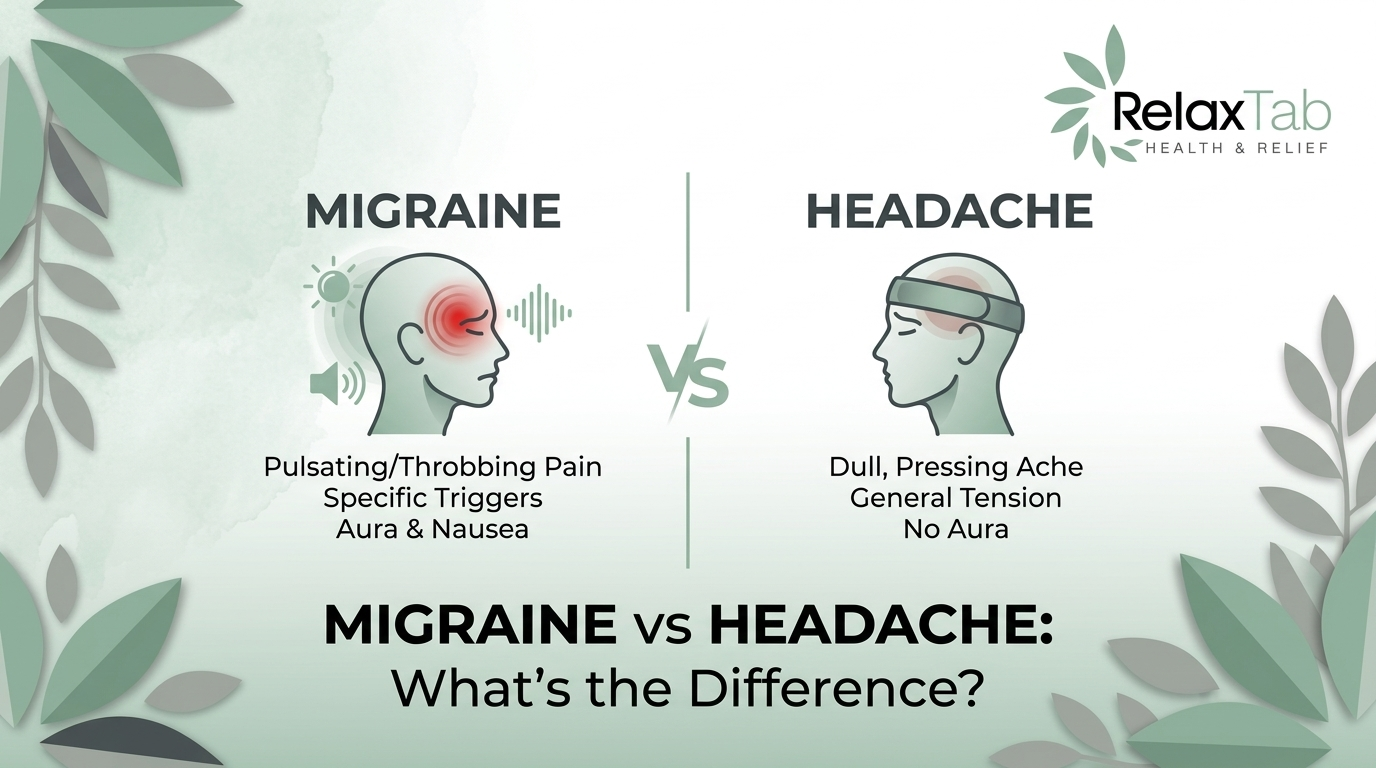
Head pain is common, but not every headache is a migraine. A regular headache may cause pressure, tightness, or aching around the head, while migraine can involve moderate to severe throbbing pain along with nausea, vomiting, and sensitivity to light or sound. Migraine is also considered a neurological condition rather than simply another name for a bad headache.
The good news is that understanding the difference between headache and migraine can make it easier to recognize symptoms, identify triggers, choose appropriate relief, and know when professional medical advice is needed.
In this guide, we’ll compare migraine vs headache, explain the most common types of headaches, discuss migraine symptoms and causes, explore common triggers, and cover practical migraine relief and treatment options.
Headache vs Migraine Comparison
The simplest way to understand migraine vs headache is that “headache” describes head pain, while migraine is a neurological disorder that can produce head pain alongside several other symptoms.
| Feature | Headache | Migraine |
| Pain | May be mild to moderate | Often moderate to severe |
| Sensation | Pressure, aching or tightness | Often throbbing or pulsating |
| Location | Can affect different areas | Often one side, but can affect both |
| Nausea | Less typical | Common |
| Vomiting | Less common | Can occur |
| Light sensitivity | Possible | Common |
| Sound sensitivity | Possible | Common |
| Movement | May not significantly worsen pain | Can make pain worse |
| Aura | Uncommon | Can occur in some people |
| Duration | Varies by headache type | Often 4 hours to several days |
| Effect on daily life | Usually manageable | Can be disabling |
Not everyone experiences migraine in exactly the same way. Some people have migraine without severe head pain, while others experience neurological symptoms such as aura before or during an attack.
What Is a Headache?
A headache is pain or discomfort affecting the head, scalp, or upper neck. It is a symptom rather than one single disease.
There are many different causes and types of headaches. Stress, dehydration, illness, poor sleep, muscle tension, eye strain, and other factors can contribute to head pain.
Most ordinary headaches are not caused by a serious medical condition and improve with rest, hydration, lifestyle changes, or appropriate pain relief. However, persistent or unusual headaches should not simply be ignored.
Common Headache Characteristics
Depending on the type, a headache may feel like:
- Pressure around the forehead
- Tightness around the head
- Aching pain
- Pain around the eyes
- Pain at the back of the head or neck
- Mild to moderate discomfort
- Temporary pain after stress or fatigue.
The symptoms depend heavily on the underlying headache type.
What Is a Migraine?
Migraine is a neurological condition that can cause attacks involving head pain and other symptoms. It is not simply a stronger version of an ordinary headache.
A migraine attack can involve:
- Moderate to severe head pain
- Throbbing or pulsating pain
- Nausea
- Vomiting
- Sensitivity to light
- Sensitivity to sound
- Sensitivity to smells
- Dizziness
- Visual disturbances
- Tingling or numbness
- Difficulty speaking in some cases.
A migraine attack may last from four hours to several days. Some people experience warning symptoms before the main headache begins, while others do not.
What Is Migraine Aura?
Aura refers to temporary neurological symptoms that can occur before or during some migraine attacks.
Visual aura is particularly common and may involve:
- Flashing lights
- Zigzag patterns
- Blind spots
- Blurred or altered vision.
Some people can also experience tingling, numbness, dizziness, or difficulty speaking.
Aura usually resolves within an hour, although anyone experiencing new or unusual neurological symptoms should seek medical advice rather than automatically assuming it is migraine.
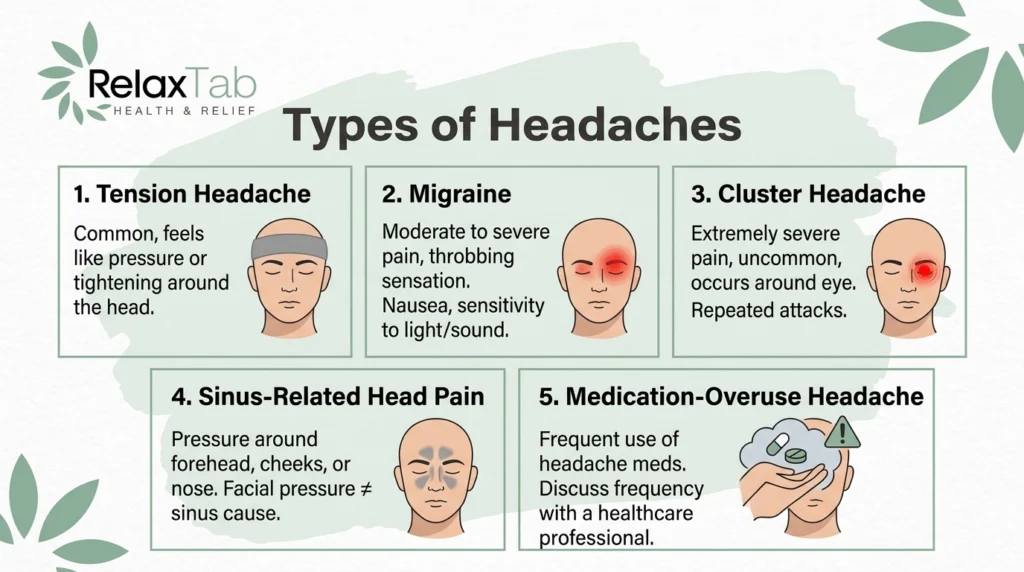
Types of Headaches
Understanding the types of headaches is useful because treatment and triggers can differ.
1. Tension Headache
Tension headaches are among the most common types of headaches.
They often feel pressure or tightening around the head. Stress, fatigue, muscle tension, and prolonged screen use may contribute to them.
2. Migraine
Migraine attacks commonly involve moderate to severe pain, often with throbbing or pulsating sensations.
Nausea and sensitivity to light and sound are common features. Some people also experience aura.
3. Cluster Headache
Cluster headaches are uncommon but can cause extremely severe pain, often around one eye.
They typically occur in repeated attacks over a period of time and may be accompanied by symptoms such as tearing, nasal congestion, or a red eye on the affected side.
4. Sinus-Related Head Pain
Pressure around the forehead, cheeks, or nose can occur with sinus problems.
However, facial pressure does not automatically mean the pain is caused by a sinus condition. Migraine can sometimes produce symptoms that resemble sinus-related discomfort.
5. Medication-Overuse Headache
Frequent use of some headache medicines can contribute to medication-overuse headache.
If you regularly need pain medication for headaches, discuss your medication frequency with a healthcare professional rather than continually increasing or repeating doses yourself.
Tension Headache vs Migraine
The tension headache vs migraine comparison is particularly useful because these two conditions can sometimes feel similar.
Tension headaches commonly produce pressure or tightening, while migraine tends to produce more intense pain and additional symptoms such as nausea or sensitivity to light and sound.
| Tension Headache | Migraine |
| Pressure or tightening | Often throbbing or pulsating |
| Usually mild to moderate | Often moderate to severe |
| Can affect both sides | Often one side, but may affect both |
| Nausea is less typical | Nausea is common |
| Light sensitivity may occur | Light sensitivity is common |
| Usually less affected by movement | Movement may worsen symptoms |
| Usually does not involve aura | Aura may occur |
If headaches repeatedly interfere with work, sleep, exercise, or everyday activities, it is worth discussing them with a healthcare professional.
Migraine Symptoms and Causes
The exact cause of migraine is complex. Genetics and environmental factors can both play a role, and migraine often runs in families.
Common Migraine Symptoms
Migraine symptoms can include:
- Throbbing or pulsating head pain
- Moderate to severe pain
- Nausea or vomiting
- Sensitivity to light
- Sensitivity to sound
- Sensitivity to smells
- Dizziness
- Visual changes
- Tingling or numbness
- Fatigue or difficulty concentrating.
Some people also experience symptoms before the headache begins.
These may include unusual tiredness, frequent yawning, food cravings, mood changes, thirst, or neck stiffness.
Migraine Phases
A migraine attack can have several stages:
Prodrome: Early warning symptoms may appear hours or even days before the headache.
Aura: Some people experience temporary visual or neurological symptoms.
Headache: The main pain phase can last several hours or longer.
Postdrome: After the pain improves, some people feel tired, mentally foggy, dizzy, or drained.
Not everyone experiences every stage.
What Triggers a Migraine?
One of the most common questions is what triggers a migraine?
There is no universal trigger. A factor that causes migraine for one person may have little or no effect on another.
Common potential triggers include:
- Stress
- Changes in sleep
- Skipping meals
- Dehydration
- Hormonal changes
- Caffeine changes
- Alcohol
- Certain foods
- Strong smells
- Bright light
- Weather changes
- Fatigue
- Changes in daily routine.
The American Migraine Foundation recommends paying attention to individual patterns rather than assuming every commonly reported “migraine food” is automatically a personal trigger.
Keep a Migraine Diary
A headache or migraine diary can help identify patterns.
Record:
- Date and time of the attack
- What you ate
- Sleep duration
- Stress level
- Hydration
- Caffeine intake
- Menstrual cycle, if relevant
- Weather changes
- Symptoms
- Medicines taken
- How long symptoms lasted.
Over time, this information can help you and your healthcare professional identify possible triggers and treatment patterns.
Migraine Relief and Treatment
There is no single treatment that works for everyone. Migraine management may involve treating an attack when it occurs and preventing future attacks when they are frequent or disruptive.
Immediate Migraine Relief
When symptoms begin, some people find it helpful to:
- Rest in a quiet, dark room
- Drink water
- Eat if they have skipped a meal
- Reduce exposure to bright light
- Avoid strong smells
- Reduce noise
- Follow their healthcare professional’s treatment plan.
Some over-the-counter pain medicines may help certain people with acute headache or migraine pain, but they are not appropriate for everyone.
If you take other medicines, have existing health conditions, are pregnant, or regularly experience migraine, ask a doctor or pharmacist which options are appropriate.
The NHS lists medicines such as paracetamol and ibuprofen among possible treatments for migraine attacks, while prescription treatments may include medicines such as triptans or gepants depending on the individual situation.
Preventive Migraine Treatment
People who experience frequent or particularly disruptive migraine attacks may need preventive treatment.
Depending on the individual, a healthcare professional may consider:
- Preventive prescription medicines
- Lifestyle adjustments
- Stress-management techniques
- Cognitive behavioural therapy
- Relaxation techniques
- Regular exercise
- Sleep management
- Trigger management.
The appropriate treatment depends on the person’s symptoms, medical history, frequency of attacks, other medicines, and individual risk factors.
Pain Relief Options
If you’re researching pain relief options, you can explore the Pain Relief category from Relax Tab.
Medication should always be selected according to the specific type of pain and individual medical circumstances. Prescription medicines should be used only as directed by an appropriate healthcare professional.
For broader information, you can also read Relax Tab’s guide on types of pain and treatment options.
How Sleep Can Affect Headaches and Migraine
Sleep and migraine have a close relationship.
Too little sleep, too much sleep, or inconsistent sleeping patterns may increase the likelihood of migraine attacks for some people. The American Migraine Foundation identifies regular sleep as an important part of migraine management.
If poor sleep is also affecting your headaches, read our guide on what causes trouble sleeping for additional information about common sleep-related factors.
A consistent sleep routine may be more useful than simply trying to sleep longer.
Can Headaches Affect Sleep?
Yes. Headaches and migraine can make it difficult to fall asleep, stay asleep, or return to sleep after waking.
At the same time, poor sleep can contribute to headaches in some people.
This creates a cycle where pain disrupts sleep and poor sleep may make future symptoms harder to manage.
If you regularly experience back pain at night, headaches, or other pain that interferes with sleep, consider discussing the pattern with a healthcare professional.
How Much Does Migraine Treatment Cost?
The cost of migraine treatment varies significantly depending on the type of treatment, whether it is over-the-counter or prescription, where you receive care, and whether treatment is covered by a healthcare system or insurance.
In the UK, treatment costs can differ between NHS and private care, while prescription and pharmacy costs can also vary.
Instead of choosing treatment based only on price, consider:
- Whether the treatment is appropriate for your symptoms
- Whether it requires a prescription
- Possible side effects
- Drug interactions
- How frequently you need it
- Whether preventive treatment may reduce recurring attacks.
A pharmacist or doctor can help you compare suitable options safely.
Best Practices for Managing Headaches and Migraine
Good headache management is not only about taking medication after pain starts.
1. Maintain Regular Sleep
Try to keep your bedtime and wake-up time reasonably consistent.
2. Stay Hydrated
Dehydration can contribute to headaches and may trigger migraine in some people. Drink fluids regularly throughout the day.
3. Avoid Skipping Meals
Long gaps between meals may contribute to migraine attacks for some people.
4. Track Your Symptoms
A headache diary can reveal patterns that are difficult to notice from memory alone.
5. Manage Stress
Stress is a commonly reported migraine trigger. Relaxation exercises, regular physical activity, mindfulness, and other stress-management techniques may help.
6. Be Careful With Caffeine
Caffeine affects people differently. Sudden changes in caffeine intake may contribute to headaches for some people, while controlled amounts may help some migraine sufferers.
7. Avoid Medication Overuse
Taking acute headache medicines too frequently can contribute to medication-overuse headache.
If you need pain relief repeatedly, speak with a healthcare professional about a longer-term management plan.
When to See a Doctor for Migraine
Knowing when to see a doctor for migraine is important.
Make an appointment with a healthcare professional if:
- Your headaches are becoming more frequent
- Your migraine pattern changes
- Headaches are interfering with work or daily life
- Your usual treatment stops working
- You regularly need pain medication
- Your symptoms are becoming more severe
- You experience new neurological symptoms
- You are unsure whether your symptoms are actually migraine.
A doctor may diagnose migraine based largely on your symptoms and medical history. There is not one blood test or scan that automatically confirms migraine.
When Is a Headache an Emergency?
Seek urgent medical attention for a sudden, extremely severe headache, particularly if it reaches maximum intensity within minutes.
Emergency assessment is also important when severe head pain occurs alongside symptoms such as:
- Weakness or paralysis
- New difficulty speaking
- Confusion
- Fainting
- Seizures
- Significant vision loss
- Fever and a stiff neck
- A serious head injury.
The American Migraine Foundation specifically advises urgent evaluation for a sudden “worst headache” that reaches maximum intensity quickly because serious conditions can sometimes present this way.
FAQs
Q1: Is migraine worse than a normal headache?
A: Migraine can be significantly more disabling than many common headaches because it may involve severe head pain, nausea, vomiting, and sensitivity to light or sound. However, headache severity varies, and some non-migraine headaches can also be extremely painful.
Q2: Can a headache turn into a migraine?
A: A typical headache does not necessarily “turn into” migraine. Migraine is a distinct neurological condition, although the symptoms of different headache disorders can overlap and sometimes be difficult to distinguish without professional assessment.
Q3: How long does a migraine last?
A: A migraine attack can last from around four hours to several days. The exact duration varies between individuals and between attacks.
Q4: What is the fastest way to relieve a migraine?
A: There is no single fastest method for everyone. Early treatment, resting in a dark and quiet environment, hydration, and following an individualized treatment plan may help. Some people require specific prescription migraine medicines.
Q5: Can stress cause migraines?
A: Stress is a commonly reported migraine trigger. However, migraine is not simply caused by stress. Genetics, hormones, sleep, diet, environmental factors, and individual neurological sensitivity can also influence attacks.
Q6: What triggers a migraine?
A: Potential triggers include stress, irregular sleep, dehydration, skipped meals, hormonal changes, caffeine changes, alcohol, certain foods, strong smells, weather changes, and fatigue. Triggers are highly individual.
Q7: Can migraine be cured?
A: There is currently no universal cure for migraine, but treatment can help control symptoms and reduce the frequency or severity of attacks. Management may combine acute treatment, preventive medicines, and lifestyle strategies.
Conclusion
Understanding migraine vs headache can help you recognize when ordinary head pain may actually be part of a migraine attack.
A headache is a broad term for head pain, while migraine is a neurological condition that can involve throbbing pain, nausea, sensitivity to light and sound, aura, and other symptoms.
The most useful approach is to look beyond pain intensity. Consider the pattern, associated symptoms, duration, triggers, and effect on daily activities.
Keeping a headache diary, maintaining regular sleep and meals, staying hydrated, managing stress, and avoiding medication overuse can all support better headache management.
If you regularly need pain relief or your headaches are becoming more frequent or severe, speak with a healthcare professional for an appropriate diagnosis and treatment plan.
For additional information about pain management, visit Relax Tab or explore our Pain Relief category.
Medical disclaimer: This article is for general educational purposes and does not replace diagnosis or treatment from a qualified healthcare professional. Always check with a doctor or pharmacist before starting, stopping, or changing medication.