
Blog
What Causes Trouble Sleeping? 12 Real Reasons You’re Awake

Why Can’t I Sleep?
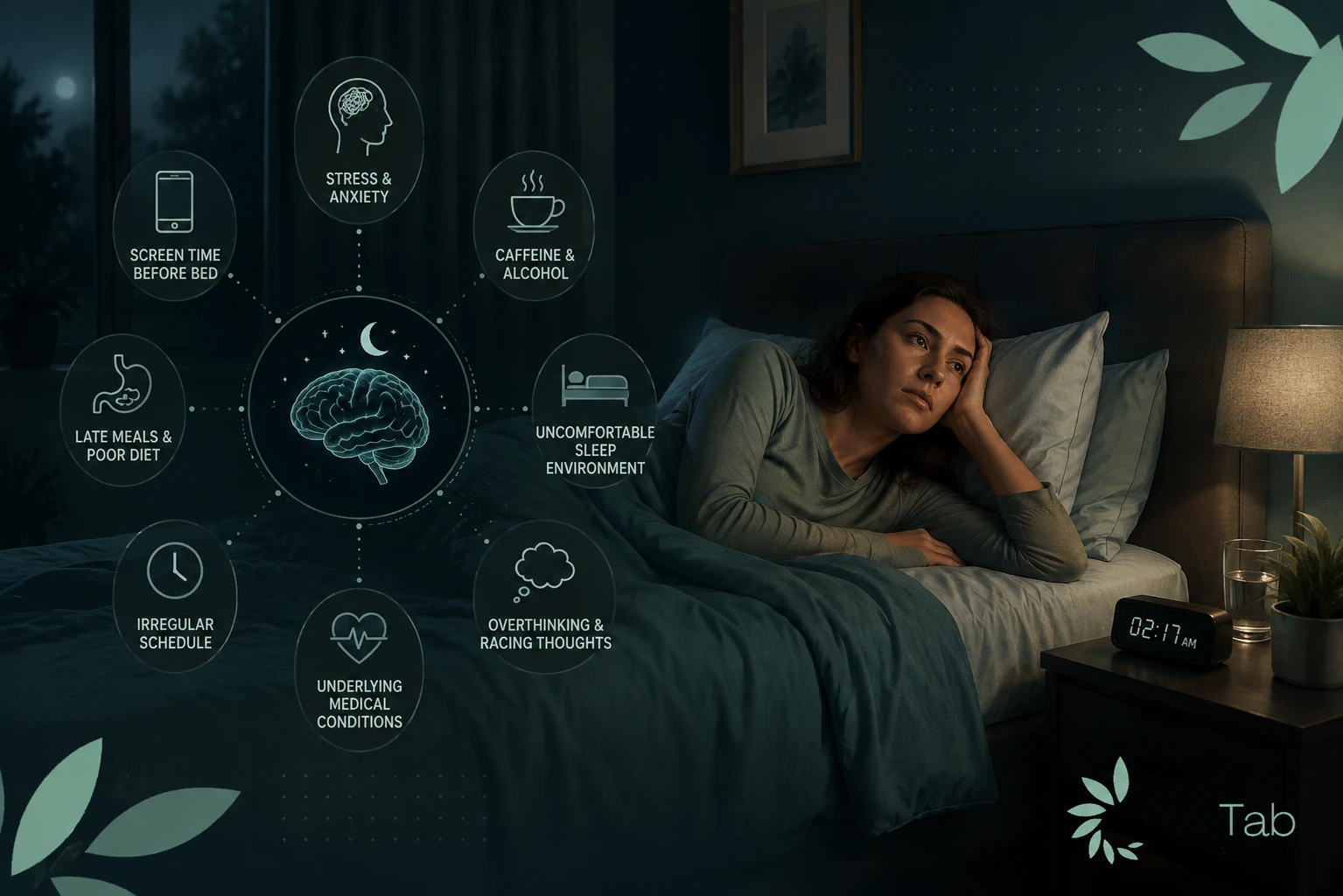
Trouble sleeping is usually caused by a combination of factors: stress or anxiety, poor sleep habits, caffeine or alcohol use, an irregular schedule, an uncomfortable sleep environment, or an underlying medical condition.
In most cases, it’s not just one thing. Your body runs on a 24-hour internal clock called the circadian rhythm, and when that rhythm gets disrupted — by worry, screens, late meals, or shifting sleep times — falling and staying asleep becomes harder.
The good news: once you identify which of these factors applies to you, sleep is often very fixable.
What Is Trouble Sleeping (Insomnia)?
Trouble sleeping, medically referred to as insomnia, is difficulty falling asleep, staying asleep, or waking up too early and not being able to get back to sleep — even when you have enough time and opportunity to rest.
Insomnia comes in two forms:
- Acute insomnia — short-term, usually triggered by stress, travel, or a specific event. Lasts days to a few weeks.
- Chronic insomnia — happens at least three nights a week for three months or longer, often layered with an underlying cause.
According to sleep health research, roughly 1 in 3 adults report at least occasional insomnia symptoms, and around 10–15% experience chronic insomnia significant enough to affect daily life.
If difficulty falling asleep or staying asleep keeps happening, it may help to understand what insomnia is and when ongoing sleep problems may need professional attention.
For more information about insomnia symptoms, causes, diagnosis, and treatment, see the National Heart, Lung, and Blood Institute’s insomnia guide.
Why Can’t I Sleep? The Main Causes of Insomnia
Trouble sleeping rarely has a single cause. It’s usually a mix of lifestyle, psychological, and physical factors working against your natural sleep drive. Here are the most common ones.
Stress and Anxiety Causing Insomnia
Can stress cause trouble sleeping? Yes. Stress and anxiety are the single most common reasons adults report difficulty sleeping.
When you’re stressed, your body releases cortisol and adrenaline — hormones designed to keep you alert. That’s useful during the day, but at night it keeps your brain in “monitoring mode,” making it hard to switch off.
Anxiety adds a second layer: racing thoughts, rumination, and a heightened startle response that makes it easy to wake up and hard to fall back asleep.
Common signs stress is the cause:
- Your mind races the moment you lie down
- You feel physically tired but mentally “wired”
- Sleep gets worse during high-pressure periods (deadlines, exams, family stress)
- You wake at 3–4am with worried thoughts.
Poor Sleep Hygiene and Insomnia
Sleep hygiene refers to the daily habits and bedroom conditions that either support or sabotage your sleep. Poor sleep hygiene is one of the most fixable causes of insomnia.
Common sleep hygiene mistakes include:
- Going to bed and waking up at different times every day
- Using your bed for work, scrolling, or watching TV
- Napping too long or too late in the day
- Eating heavy meals close to bedtime
- Exercising vigorously right before bed
- Keeping the bedroom too warm, bright, or noisy.
Your brain learns associations. If your bed is where you scroll, worry, or work, it stops associating the bed with sleep — a pattern sleep specialists call conditioned arousal.
Improving everyday sleep habits can make a significant difference. For practical strategies, explore these sleep hygiene tips for creating a healthier sleep routine.
You can also learn more about insomnia symptoms, causes, and treatment through MedlinePlus from the U.S. National Library of Medicine.
Caffeine and Sleep Problems
Can caffeine cause insomnia? Yes — caffeine is a stimulant that blocks adenosine, the brain chemical that builds up sleep pressure throughout the day.
Caffeine has a half-life of roughly 5–6 hours, meaning a coffee at 3pm can still have half its stimulant effect in your system at 9pm.
| Drink | Approx. Caffeine (mg) | Hours Before Bed to Avoid |
| Espresso shot | 63mg | 8+ hours |
| Brewed coffee (240ml) | 95mg | 8+ hours |
| Black tea | 47mg | 6+ hours |
| Green tea | 28mg | 6+ hours |
| Energy drink | 80–150mg | 10+ hours |
| Dark chocolate (30g) | 20mg | 4+ hours |
Tip: If you’re sensitive to caffeine, aim for your last cup no later than early afternoon.
Alcohol and Nicotine
Alcohol may make you feel drowsy initially, but it fragments sleep later in the night by suppressing REM sleep and triggering wake-ups as it’s metabolized.
Nicotine is a stimulant, similar to caffeine, and smokers often report lighter, more fragmented sleep — especially if they smoke close to bedtime.
Screens, Light, and Bedroom Environment
Blue light from phones, tablets, and laptops suppresses melatonin, the hormone that signals to your brain it’s time to sleep.
A poor sleep environment compounds the problem:
- Room too warm (ideal range is roughly 16–19°C / 60–67°F)
- Too much ambient light
- Noise from traffic, partners, or devices
- An uncomfortable mattress or pillow.
Irregular Schedules, Shift Work, and Jet Lag
Your circadian rhythm relies on consistency. Shift work, frequent travel across time zones, and irregular bedtimes (even on weekends) confuse your internal clock, making it harder to fall asleep and wake up feeling rested.
Shift workers are especially prone to Shift Work Sleep Disorder, where the biological drive to sleep at night clashes directly with a daytime sleep schedule.
Medical Conditions That Cause Insomnia
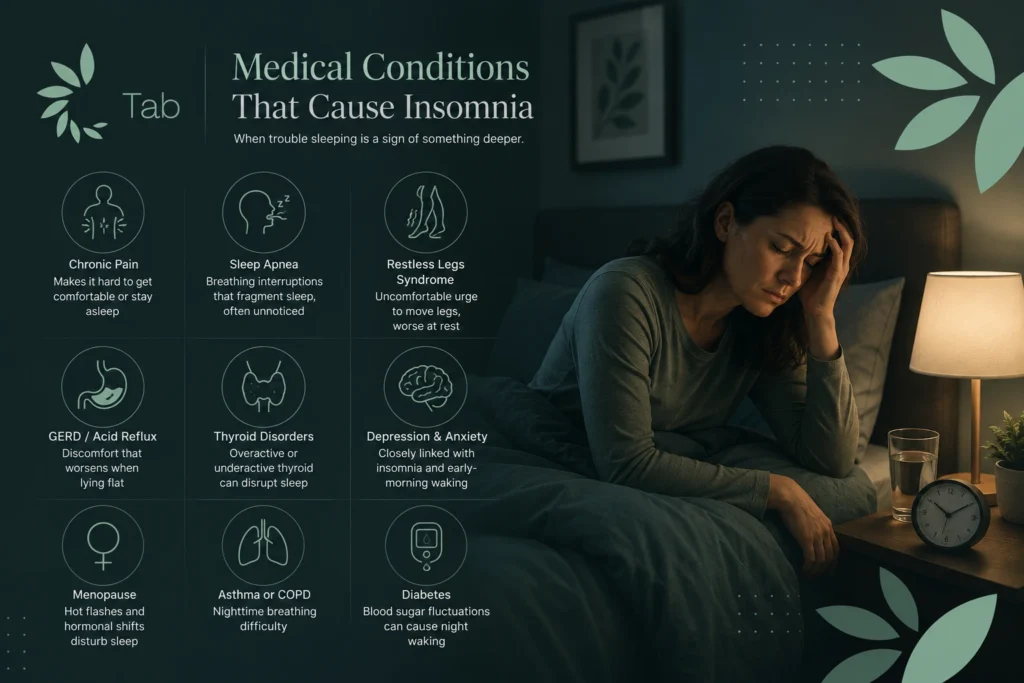
Sometimes trouble sleeping isn’t about habits at all — it’s a symptom of an underlying health condition.
What medical conditions can affect sleep? The most common include:
- Chronic pain (arthritis, back pain, fibromyalgia) — makes it hard to get comfortable or stay asleep
- Sleep apnea — repeated breathing interruptions that fragment sleep, often unnoticed by the person experiencing it
- Restless legs syndrome — an uncomfortable urge to move the legs, worse at rest
- GERD/acid reflux — discomfort that worsens when lying flat
- Thyroid disorders — both an overactive and underactive thyroid can disrupt sleep
- Depression and anxiety disorders — closely linked with both insomnia and early-morning waking
- Menopause — hot flashes and hormonal shifts frequently disturb sleep
- Asthma or COPD — nighttime breathing difficulty
- Diabetes — blood sugar fluctuations can cause night waking.
If trouble sleeping persists despite good habits, an underlying medical condition is worth ruling out.
Medications That Disrupt Sleep
Certain medications list insomnia as a side effect, including some:
- Antidepressants and stimulant-based ADHD medications
- Corticosteroids
- Certain blood pressure medications (beta-blockers)
- Decongestants containing pseudoephedrine
- Some asthma medications.
If you suspect a medication is affecting your sleep, don’t stop it on your own — speak with a doctor or pharmacist about timing adjustments or alternatives.
Age, Hormones, and Life Stage Factors
Sleep architecture naturally changes with age. Older adults often produce less melatonin and spend less time in deep sleep, making them more prone to lighter, more fragmented sleep.
Hormonal shifts during pregnancy, perimenopause, and menopause are also well-documented triggers for new or worsening insomnia, largely driven by fluctuating estrogen and progesterone levels.
Causes of Trouble Sleeping: Comparison Table
| Cause Category | Example Triggers | Typical Pattern | Usually Fixable By |
| Psychological | Stress, anxiety, worry | Racing mind at night, 3am waking | Relaxation techniques, therapy (CBT-I) |
| Lifestyle/Hygiene | Irregular schedule, screens, naps | Hard to fall asleep, groggy mornings | Consistent routine, wind-down habits |
| Stimulants | Caffeine, nicotine | Difficulty falling asleep | Timing/reducing intake |
| Environmental | Noise, light, temperature | Frequent night waking | Bedroom optimization |
| Medical | Sleep apnea, pain, reflux, thyroid | Persistent, doesn’t improve with habits | Medical evaluation |
| Medication-related | Steroids, stimulants, decongestants | Starts after new prescription | Doctor review |
| Hormonal | Menopause, pregnancy | Hot flashes, night sweats, waking | Medical guidance, lifestyle support |
How to Know If It’s Chronic Insomnia
You may be dealing with chronic insomnia if, for three months or longer, you experience at least three nights a week of:
- Taking more than 30 minutes to fall asleep
- Waking frequently during the night
- Waking too early and being unable to fall back asleep
- Feeling unrefreshed despite adequate time in bed.
If this sounds familiar, it’s worth having a conversation with a healthcare professional rather than continuing to self-manage indefinitely.
Expert Tips to Improve Sleep Naturally
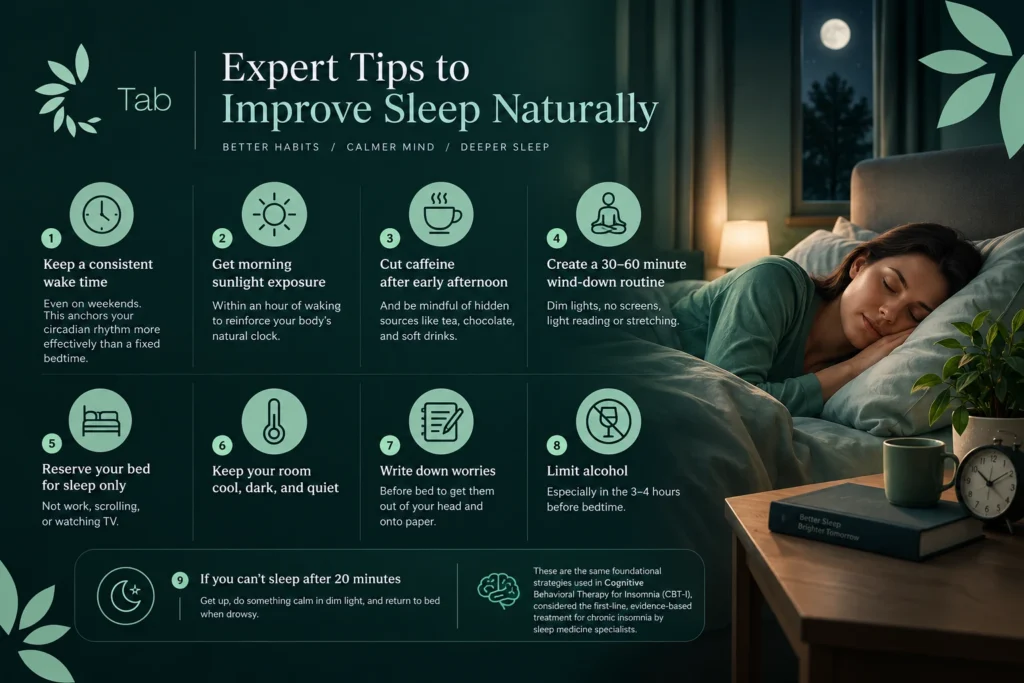
- Keep a consistent wake time — even on weekends. This anchors your circadian rhythm more effectively than a fixed bedtime.
- Get morning sunlight exposure within an hour of waking to reinforce your body’s natural clock.
- Cut caffeine after early afternoon, and be mindful of hidden sources like tea, chocolate, and soft drinks.
- Create a 30–60 minute wind-down routine — dim lights, no screens, light reading or stretching.
- Reserve your bed for sleep only — not work, scrolling, or watching TV.
- Keep your room cool, dark, and quiet.
- Write down worries before bed to get them out of your head and onto paper.
- Limit alcohol, especially in the 3–4 hours before bedtime.
- If you can’t sleep after 20 minutes, get up, do something calm in dim light, and return to bed when drowsy.
These are the same foundational strategies used in Cognitive Behavioral Therapy for Insomnia (CBT-I), considered the first-line, evidence-based treatment for chronic insomnia by sleep medicine specialists.
If persistent sleep difficulties are related to anxiety or another underlying condition, a healthcare professional can determine whether treatment or medication is appropriate. Alprax XR 2 (alprazolam 2mg) is a prescription medicine that should only be used under appropriate medical supervision.
When to See a Doctor
Trouble sleeping is worth a medical conversation if:
- It’s lasted longer than a few weeks despite good sleep habits
- It’s affecting your mood, concentration, or daily functioning
- You snore loudly, gasp, or stop breathing during sleep (possible sleep apnea)
- It coincides with a new medication or health condition
- You’re relying on alcohol or over-the-counter aids to fall asleep.
A doctor or pharmacist can help identify whether an underlying condition, medication, or life-stage factor is involved, and talk through appropriate next steps — which may range from lifestyle adjustments to short-term treatment options where clinically appropriate.
A doctor or pharmacist can help identify whether an underlying condition, medication, or life-stage factor is involved, and talk through appropriate next steps — which may range from lifestyle adjustments to short-term sleep medication options where clinically appropriate.
At Relax Tab, our team can help point you toward the right information and connect you with guidance if you have questions about sleep-related health concerns — you can reach out to our team or browse our health and wellness blog for more resources on sleep, stress, and general wellbeing.
FAQs
Q1: What causes trouble sleeping at night?
A: The most common causes are stress and anxiety, poor sleep habits, caffeine or alcohol close to bedtime, an irregular sleep schedule, an uncomfortable bedroom environment, and underlying medical conditions like sleep apnea or chronic pain.
Q2: Why can’t I sleep even when I’m exhausted?
A: Being physically tired doesn’t guarantee your brain is ready to sleep. Stress hormones, screen use, and an inconsistent schedule can keep your nervous system in an alert state even when your body feels worn out.
Q3: Can anxiety alone cause insomnia?
A: Yes. Anxiety is one of the leading causes of insomnia. Racing thoughts and heightened alertness make it difficult to fall asleep and easy to wake during the night.
Q4: How much caffeine is too much for sleep?
A: There’s no universal number, but consuming caffeine within 6–8 hours of bedtime is commonly linked to disrupted sleep, especially in people who are more caffeine-sensitive.
Q5: Is trouble sleeping a sign of a medical condition?
A: It can be. Persistent insomnia that doesn’t improve with better habits may signal an underlying issue such as sleep apnea, thyroid imbalance, restless legs syndrome, or a mental health condition.
Q:6 What’s the difference between acute and chronic insomnia?
A: Acute insomnia lasts days to a few weeks and is usually triggered by a specific stressor. Chronic insomnia occurs at least three nights a week for three months or more.
Q7: Does poor sleep hygiene really matter that much?
A: Yes. Inconsistent bedtimes, screen use in bed, and an unsuitable sleep environment are among the most common — and most fixable — contributors to ongoing sleep trouble.
Q8: When should I see a doctor about trouble sleeping?
A: If sleep problems last more than a few weeks, affect your daily functioning, or come with symptoms like loud snoring or gasping at night, it’s time to speak with a healthcare professional.
This article is for informational purposes only and is not a substitute for professional medical advice. If you have ongoing sleep difficulties, please consult a qualified healthcare provider.