
Blog
Sleep Hygiene Tips: 12 Simple Habits for Deeper, More Restful Sleep

If you’ve spent more nights than you’d like staring at the ceiling, you’re not alone. Millions of adults toss and turn every night, wondering why sleep — something that should come naturally — feels like a nightly battle.
Here’s the good news: for most people, better sleep isn’t about a miracle fix. It’s about sleep hygiene — a set of small, consistent habits that reset your body’s natural ability to fall and stay asleep.
In this guide, we’ll walk you through exactly what sleep hygiene means, how much sleep you actually need, and the specific habits, routines, and environment tweaks that sleep experts recommend. By the end, you’ll have a clear, practical plan you can start tonight.
What Are Sleep Hygiene Tips?
Sleep hygiene tips are evidence-based habits — like keeping a consistent sleep schedule, limiting screens before bed, and optimizing your bedroom environment — that train your body to fall asleep faster and stay asleep longer. Good sleep hygiene addresses behavior, environment, and timing, the three factors that most directly affect sleep quality.
What Is Sleep Hygiene?
Sleep hygiene refers to the daily habits, routines, and environmental factors that influence how well you sleep. The term was originally used in clinical sleep medicine, but today it’s the standard framework doctors and sleep researchers use to help people improve sleep without medication.
Good sleep hygiene covers three main areas:
- Behavioral habits — what you do during the day and right before bed
- Environmental factors — your bedroom’s light, noise, and temperature
- Timing consistency — when you go to bed and wake up.
Think of it less as a single fix and more as a foundation. Miss one piece, and the rest becomes harder to maintain.
How Much Sleep Do Adults Need?
Most adults need 7 to 9 hours of sleep per night. The National Sleep Foundation recommends 7–9 hours for adults aged 18–64, and 7–8 hours for adults 65 and older, though individual needs can vary slightly based on genetics, activity level, and overall health.
For current recommendations on how much sleep adults need and why adequate sleep matters, see the CDC’s sleep and sleep disorders guidance.
Here’s a quick breakdown by age group:
| Age Group | Recommended Sleep |
| Teens (14–17) | 8–10 hours |
| Young Adults (18–25) | 7–9 hours |
| Adults (26–64) | 7–9 hours |
| Older Adults (65+) | 7–8 hours |
Sleeping less than 7 hours regularly is linked to increased risks of weight gain, weakened immunity, mood disturbances, and reduced cognitive performance. Sleeping significantly more than 9 hours consistently can also be a sign of an underlying issue and is worth discussing with a doctor.
Why Sleep Hygiene Matters
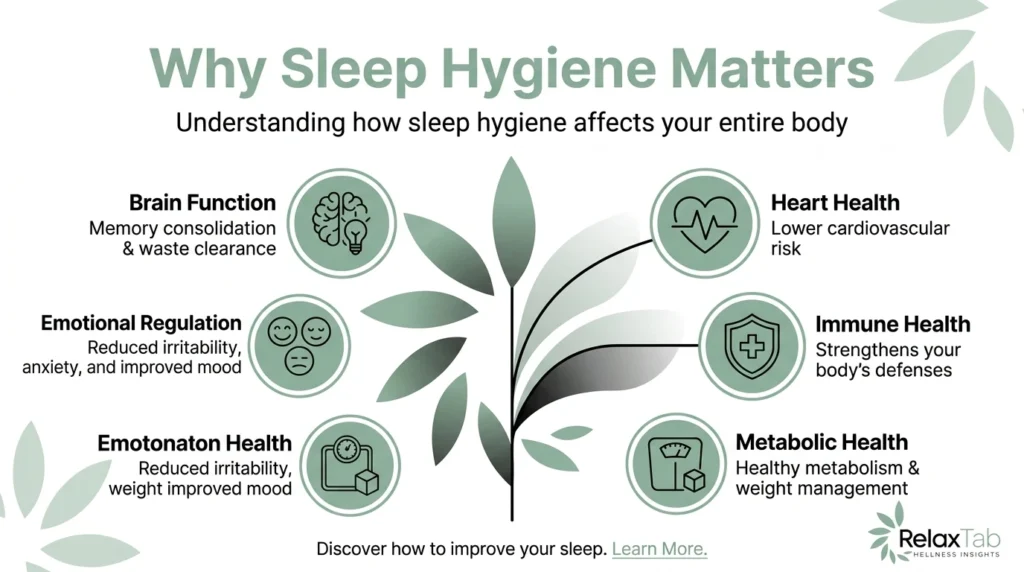
Poor sleep doesn’t just leave you tired. Over time, it affects nearly every system in your body.
If you’re struggling to sleep despite making healthy changes, understanding what causes trouble sleeping can help you identify lifestyle, environmental, or other factors affecting your rest.
- Brain function — sleep is when your brain consolidates memory and clears metabolic waste
- Immune health — chronic poor sleep weakens your body’s ability to fight illness
- Emotional regulation — sleep deprivation is closely tied to irritability, anxiety, and low mood
- Metabolic health — insufficient sleep is linked to higher risk of insulin resistance and weight gain
- Heart health — consistently short sleep is associated with higher blood pressure and cardiovascular risk.
The encouraging part: research consistently shows that improving sleep hygiene alone — without any medication — can meaningfully improve sleep quality within just a few weeks.
12 Sleep Hygiene Tips for Better Sleep Quality
1. Keep a Consistent Sleep Schedule
Go to bed and wake up at the same time every day — yes, even on weekends. This keeps your circadian rhythm (your body’s internal clock) stable, which makes falling asleep and waking up feel more automatic.
2. Get Morning Sunlight
Exposure to natural light within 30–60 minutes of waking helps regulate melatonin production later that night. A short walk outside or sitting near a bright window works well.
3. Limit Caffeine After Early Afternoon
Caffeine has a half-life of roughly 5–6 hours, meaning a 3 p.m. coffee can still be partially active in your system at 9 p.m. Try to cut caffeine intake by early afternoon.
4. Move Your Body During the Day
Regular physical activity — even a 20–30 minute walk — improves sleep depth and reduces the time it takes to fall asleep. Just avoid intense exercise within an hour of bedtime.
5. Watch Your Evening Meals
Heavy, spicy, or large meals close to bedtime can trigger discomfort and acid reflux that disrupts sleep. Aim to finish eating 2–3 hours before bed.
6. Reduce Screen Time Before Bed
Blue light from phones and laptops suppresses melatonin and keeps your brain alert. Try switching to reading, journaling, or stretching in the hour before sleep.
7. Reserve Your Bed for Sleep
Using your bed for work, scrolling, or watching TV can weaken the mental association between “bed” and “sleep.” Keep the bed reserved for sleep and intimacy only.
8. Manage Stress Before Bedtime
Racing thoughts are one of the most common reasons people can’t fall asleep. A short wind-down practice — like deep breathing or writing down tomorrow’s to-do list — helps quiet the mind.
9. Limit Naps to 20–30 Minutes
Short naps can be refreshing, but long or late-afternoon naps can make it harder to fall asleep at night. If you nap, keep it brief and before 3 p.m.
10. Avoid Alcohol Close to Bedtime
Alcohol may make you feel drowsy initially, but it disrupts deeper sleep stages later in the night, often leading to fragmented, lower-quality sleep.
11. Keep Your Bedroom Cool, Dark, and Quiet
Your body naturally drops in temperature to initiate sleep. A cooler room (around 60–67°F / 15–19°C) supports this process.
12. Build a Wind-Down Routine
A predictable pre-sleep routine signals to your brain that it’s time to slow down. Consistency matters more than the specific activities you choose.
Build a Relaxing Bedtime Routine
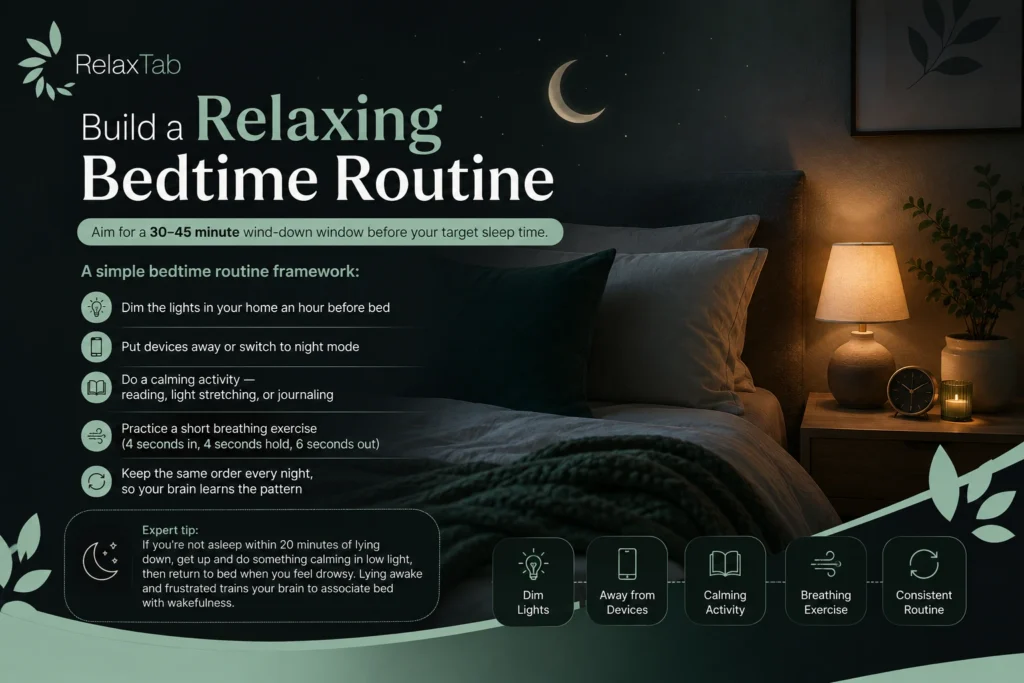
A good bedtime routine for better sleep doesn’t need to be elaborate — it needs to be consistent. Aim for a 30–45 minute wind-down window before your target sleep time.
A simple bedtime routine framework:
- Dim the lights in your home an hour before bed
- Put devices away or switch to night mode
- Do a calming activity — reading, light stretching, or journaling
- Practice a short breathing exercise (4 seconds in, 4 seconds hold, 6 seconds out)
- Keep the same order every night, so your brain learns the pattern.
If you’re not asleep within 20 minutes of lying down, get up and do something calming in low light, then return to bed when you feel drowsy. Lying awake and frustrated trains your brain to associate bed with wakefulness.
Sleep Environment Tips
Your bedroom environment plays a bigger role in sleep quality than most people realize.
Temperature
Keep your room between 60–67°F (15–19°C). A room that’s too warm is one of the most common reasons people wake up during the night.
Light
Use blackout curtains or an eye mask to block outside light. Even small amounts of light exposure can interfere with melatonin production.
Noise
Consistent background sound — like a fan or white noise machine — can mask disruptive noises better than silence in some environments.
Mattress and Pillows
An uncomfortable mattress or pillow can cause tossing and turning throughout the night. Replace mattresses every 7–10 years and pillows every 1–2 years as a general guideline.
Air Quality
A well-ventilated room with fresh air supports deeper, more restorative sleep compared to a stuffy or humid space.
Tips to Fall Asleep Faster
If you’re someone who struggles specifically with falling asleep — rather than staying asleep — these techniques target that first stretch of the night.
- Try the 4-7-8 breathing method — inhale for 4 seconds, hold for 7, exhale for 8
- Progressive muscle relaxation — tense and release each muscle group from feet to head
- Keep the room slightly cool — a drop in body temperature helps trigger sleep onset
- Avoid checking the clock — clock-watching increases anxiety about not sleeping
- Write down racing thoughts — a “brain dump” journal before bed can reduce mental clutter
- Use a consistent pre-sleep cue — a scent, sound, or ritual your brain learns to associate with sleep.
Good Sleep Habits vs Bad Sleep Habits
| Habit Area | Good Sleep Habit | Bad Sleep Habit |
| Schedule | Same bed/wake time daily | Irregular sleep times |
| Screens | Off 1 hour before bed | Scrolling in bed |
| Caffeine | None after early afternoon | Coffee/tea in the evening |
| Exercise | Regular daytime activity | Intense workouts right before bed |
| Naps | Short (20–30 min), before 3 p.m. | Long naps late in the day |
| Bedroom | Cool, dark, quiet | Warm, bright, noisy |
| Alcohol | Avoided close to bedtime | Used as a sleep aid |
| Meals | Light, 2–3 hours before bed | Heavy meals right before sleep |
Common Sleep Hygiene Mistakes
Even well-intentioned people fall into a few recurring traps:
- Trying to “catch up” on sleep with long weekend lie-ins, which disrupts weekday rhythm
- Using screens as a wind-down activity, when they actually stimulate the brain
- Treating naps as a substitute for consistent nighttime sleep
- Ignoring bedroom temperature, which is one of the most overlooked sleep disruptors
- Expecting instant results — sleep hygiene changes typically take 1–3 weeks to show full effect.
The National Heart, Lung, and Blood Institute (NHLBI) also recommends healthy sleep habits as part of managing sleep problems.
When to See a Doctor About Sleep
Good sleep hygiene resolves most everyday sleep struggles, but it isn’t a substitute for medical care. Talk to a healthcare provider if you experience:
- Difficulty sleeping most nights for more than a month
- Loud snoring, gasping, or pauses in breathing during sleep
- Excessive daytime sleepiness despite adequate time in bed
- Sleep problems are linked to anxiety, depression, or chronic pain.
A doctor can help identify whether an underlying condition, such as insomnia or sleep apnea, needs targeted treatment beyond lifestyle changes.
If lifestyle changes aren’t enough, your healthcare provider may also discuss appropriate sleeping pills as part of a treatment plan. Persistent excessive daytime sleepiness may require medical evaluation; modafinil 200mg is a prescription medicine used for certain sleep-related conditions and should only be used under medical supervision.
FAQs
Q1: How much sleep do adults need each night?
A: Most adults need 7–9 hours of sleep per night. Consistently sleeping less than this is linked to health risks including weakened immunity, weight gain, and reduced concentration.
Q2: What is the fastest way to fall asleep?
A: Slow, controlled breathing (like the 4-7-8 method), a cool dark room, and avoiding screens beforehand are among the most effective evidence-based ways to fall asleep faster.
Q3: What are the signs of poor sleep hygiene?
A: Common signs include difficulty falling asleep, frequent nighttime waking, feeling unrefreshed after a full night’s sleep, and relying on caffeine to get through the day.
Q4: Can improving sleep hygiene really fix insomnia?
A: For many people with mild to moderate sleep difficulties, consistent sleep hygiene practices significantly improve sleep quality. Chronic or severe insomnia may need additional support from a healthcare provider.
Q5: Is it bad to sleep with the TV on?
A: Yes — light and sound from a TV can interrupt deeper sleep stages, even if you don’t fully wake up. It’s best to keep the bedroom dark and quiet.
Q6: How long does it take to build good sleep habits?
A: Most people notice improvements within 1–3 weeks of consistently practicing good sleep hygiene, though full circadian adjustment can take slightly longer.
Better sleep starts with better daily habits. For more wellness guides and practical health tips, visit the Relax Tab blog. Have questions about your sleep routine? Get in touch with our team — we’re happy to help.