
Blog
Back Pain at Night: Causes, Positions & Relief Tips

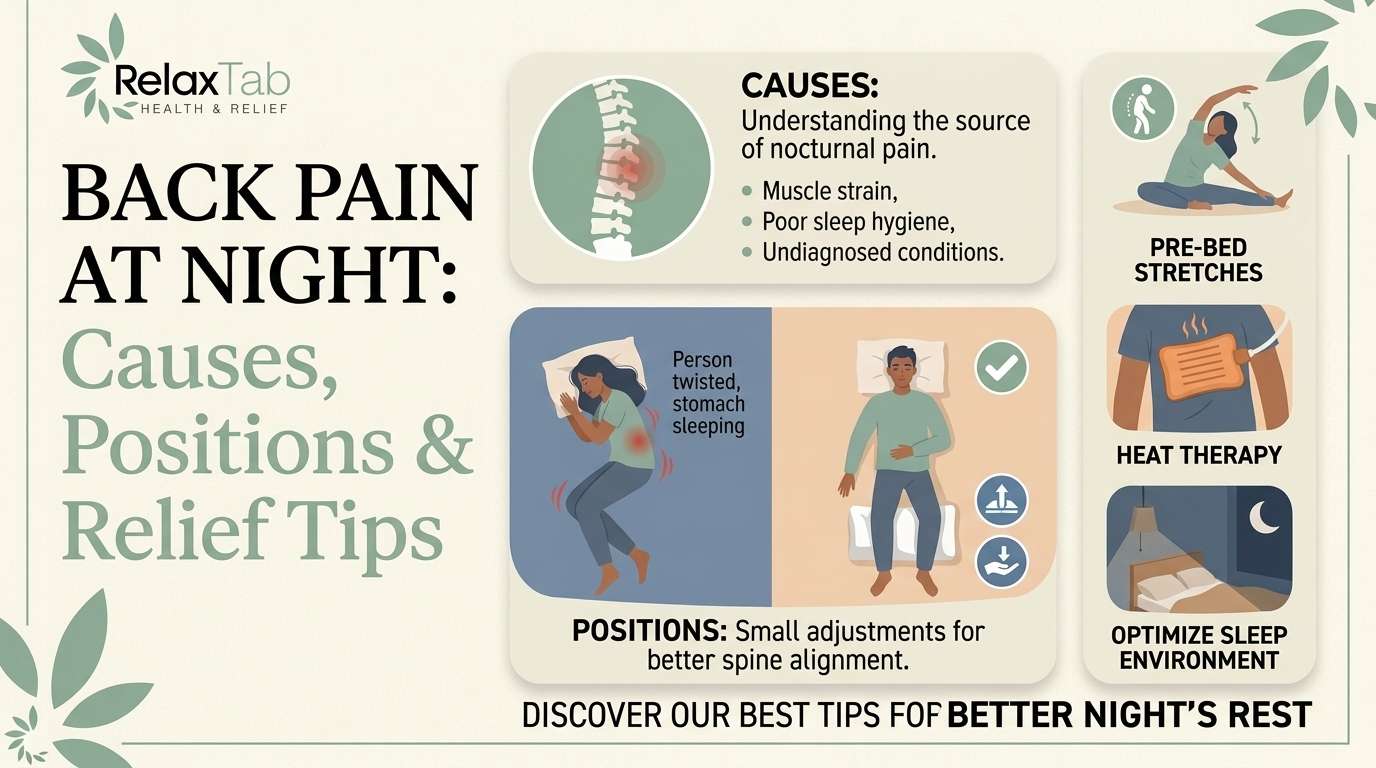
What Is Back Pain at Night?
Back pain at night is discomfort in the upper, middle or lower back that becomes noticeable or worse during the evening, while lying down, or when it wakes you from sleep. Common causes include muscle strain, prolonged sitting, poor posture, spinal problems and certain medical conditions.
Occasional nighttime discomfort is often not serious. However, back pain that repeatedly wakes you, becomes progressively worse, or does not improve with rest should be discussed with a healthcare professional.
If you’re experiencing this problem, you’re not alone. Back pain is extremely common, and most uncomplicated episodes improve over time. NICE notes that low back pain is a major cause of disability worldwide, while most episodes improve within weeks to a few months.
This guide explains nighttime back pain causes, the best sleeping position for back pain, how to manage back pain when lying down, practical relief strategies, and when to see a doctor for back pain.
Why Does My Back Hurt More at Night?
Back pain can feel worse at night for several reasons.
During the day, you may be moving around, working, exercising or simply distracted by other activities. Once you lie down in a quiet room, the sensation can become more noticeable.
Your sleeping position can also place additional stress on certain areas of the spine, hips or muscles.
Other factors may include:
- Muscle fatigue after a physically demanding day
- Prolonged sitting
- Poor posture
- An unsuitable mattress or pillow setup
- Existing spinal problems
- Muscle tightness
- Inflammation
- Nerve irritation
- Stress and poor sleep
- An underlying medical condition.
The important point is that nighttime pain does not automatically mean something serious is wrong. However, persistent or progressively worsening pain deserves appropriate evaluation.
Nighttime Back Pain Causes
There is no single cause of back pain at night. The reason can range from everyday muscle strain to conditions requiring medical attention.
1. Muscle Strain
Muscle strain is one of the common causes of back pain.
It can happen after:
- Lifting something heavy
- Exercise
- Repetitive movement
- Sudden twisting
- Poor lifting technique
- Unusual physical activity.
The muscles may become sore and tight later in the day, making discomfort more noticeable when you finally lie down.
2. Poor Sleeping Position
Your spine benefits from a comfortable, supported position during sleep.
If your sleeping position places your lower back in an awkward position for several hours, you may wake with stiffness or pain.
Changing your position and using pillows strategically can sometimes reduce pressure.
3. Prolonged Sitting
Long periods of sitting can contribute to stiffness and discomfort, particularly when combined with poor posture or limited movement.
This can be especially relevant for people who spend much of their day working at a desk.
Taking regular movement breaks may help prevent stiffness from building throughout the day.
4. Sciatica
Sciatica involves pain related to irritation or compression of nerves in the lower back.
It can cause pain that travels from the lower back into the buttock and leg.
Other symptoms can include:
- Tingling
- Numbness
- Weakness
- Burning or shooting pain.
Treatment depends on the cause and severity. NHS guidance lists exercise, pain relief and physiotherapy among treatment approaches for sciatica.
5. Herniated or Slipped Disc
A disc between the spinal bones can become damaged or displaced and sometimes irritate nearby nerves.
Symptoms may include:
- Back pain
- Leg pain
- Tingling
- Numbness
- Muscle weakness.
Persistent symptoms should be assessed rather than assumed to be ordinary muscle soreness.
6. Arthritis and Degenerative Changes
Age-related changes in the spine can sometimes contribute to persistent back discomfort.
Arthritis and other musculoskeletal conditions may cause stiffness, reduced mobility and pain.
Treatment depends on the specific condition and may include exercise, physical therapy, lifestyle measures and medication where appropriate.
7. Inflammatory Conditions
Certain inflammatory conditions can cause back pain and stiffness.
For example, inflammatory spinal conditions may produce symptoms that behave differently from ordinary mechanical back pain.
Persistent nighttime symptoms, particularly when accompanied by significant morning stiffness or other systemic symptoms, should be evaluated.
8. Kidney or Urinary Problems
Not every pain felt around the lower back is caused by the spine.
Kidney or urinary conditions can sometimes cause pain in the back or side, particularly when other symptoms are present.
Pay attention to symptoms such as:
- Fever
- Chills
- Pain or burning when urinating
- Blood in the urine
- Changes in urination.
These symptoms require medical assessment rather than simply treating the discomfort as back pain.
9. Less Common but More Serious Causes
Rarely, nighttime back pain can be associated with more serious problems such as infection, fracture or cancer.
NICE notes that serious causes of low back pain are uncommon, but clinicians should use appropriate assessment and red-flag screening when symptoms suggest a potentially serious condition.
Lower Back Pain at Night Causes
Lower back pain at night can result from muscle strain, prolonged sitting, poor sleeping posture, sciatica, disc problems, arthritis or other spinal conditions. Less commonly, persistent nighttime pain may be associated with infection, fracture or another underlying medical condition.
The location and behavior of the pain can provide useful clues.
If Pain Is Mainly in the Lower Back
Muscle strain, posture, prolonged sitting and mechanical back problems are common possibilities.
If Pain Travels Down the Leg
Pain extending from the lower back into the buttock or leg may indicate nerve irritation, such as sciatica.
If Pain Comes With Fever
Back pain combined with fever, chills or feeling generally unwell needs prompt medical assessment.
If Pain Comes With Bladder or Bowel Changes
This can be an emergency, particularly if accompanied by numbness around the genitals or anus or significant leg weakness.
Back Pain When Lying Down
Why Does My Back Hurt When I Lie Down?
Back pain when lying down may occur because your sleeping position changes the load placed on your spine, muscles and joints. Mattress support, pillow placement, muscle stiffness and underlying conditions can also influence symptoms.
If changing position improves your discomfort, your sleeping setup may be contributing.
However, if lying down consistently makes your pain worse, particularly if it prevents sleep or continues for weeks, don’t assume the mattress is the only cause.
The NHS specifically recommends medical assessment when back pain does not improve with rest or is worse at night.
Best Sleeping Position for Back Pain
There is no single sleeping position that works for everyone.
The best sleeping position for back pain is usually the position that keeps your spine comfortable and supported without increasing symptoms.
1. Sleeping on Your Side
Side sleeping can be comfortable for many people.
Try placing a pillow between your knees.
This may help keep your hips more comfortably aligned and reduce twisting through the lower back.
2. Sleeping on Your Back
Some people find sleeping on their back comfortable.
A pillow underneath the knees can provide additional support and may reduce the feeling of strain in the lower back.
3. Avoid Positions That Increase Pain
If a position consistently increases your pain, numbness or tingling, try another position.
Comfort is important, but new or worsening neurological symptoms should not simply be managed by changing pillows.
4. Choose Supportive Bedding
A mattress does not need to be extremely firm to support your back.
The goal is comfortable support that allows you to maintain a natural and relaxed sleeping position.
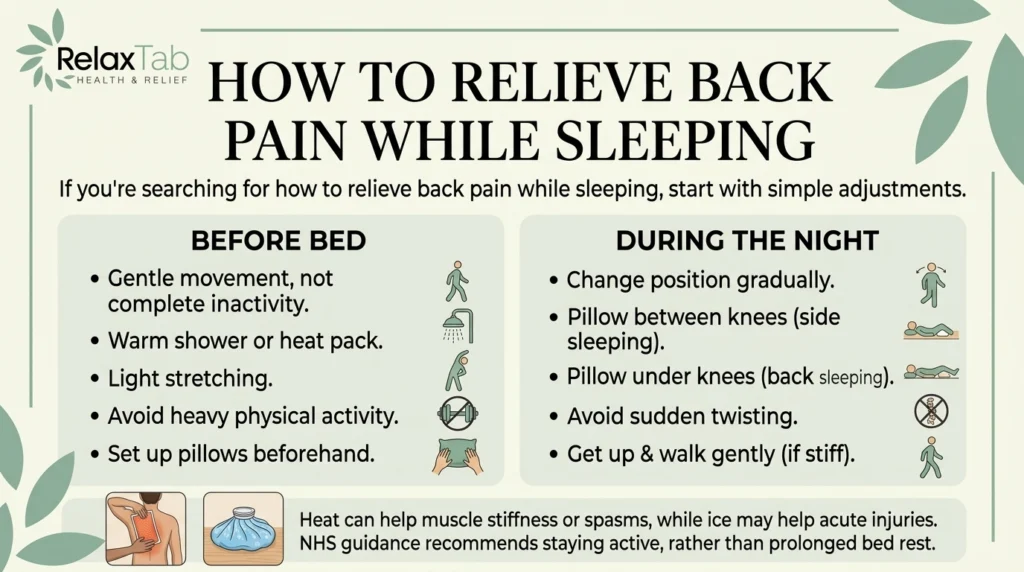
How to Relieve Back Pain While Sleeping
If you’re searching for how to relieve back pain while sleeping, start with simple adjustments.
Before Bed
Try:
- Gentle movement rather than complete inactivity.
- A warm shower or heat pack if warmth helps your muscle stiffness.
- Light stretching that does not increase pain.
- Avoiding heavy physical activity immediately before bedtime.
- Setting up your pillows before getting into bed.
During the Night
If pain wakes you:
- Change position gradually.
- Try a pillow between your knees if side sleeping.
- Try a pillow under your knees if sleeping on your back.
- Avoid suddenly twisting your spine.
- Get up and walk gently if prolonged lying increases stiffness.
Heat can help some people with muscle stiffness or spasms, while ice may help with some acute injuries. NHS guidance also recommends staying active rather than spending prolonged periods resting in bed.
Back Pain Relief Tips
Here are practical back pain relief tips that can fit into everyday life.
Stay Active
For uncomplicated back pain, prolonged bed rest is generally not recommended.
Gentle movement and gradually returning to normal activities can support recovery. NICE recommends encouraging people with low back pain to continue normal activities and self-manage where appropriate.
Take Movement Breaks
If you work at a desk, avoid remaining in one position for hours.
Stand up, walk around and change position regularly.
Use Heat or Cold
A wrapped heat pack may help muscle stiffness or spasms.
An ice pack wrapped in a towel may help some acute injuries and swelling.
Never place extreme heat or ice directly against your skin.
Improve Your Daytime Posture
Your nighttime symptoms may be influenced by what happens during the day.
Consider:
- Adjusting your workstation
- Keeping your screen at a comfortable height
- Supporting your lower back
- Avoiding prolonged slouching
- Taking regular movement breaks.
Strengthen Your Core Gradually
A strong and well-conditioned body can support everyday movement.
However, avoid starting intense exercises during an acute flare without appropriate advice.
Protect Your Sleep
Pain and poor sleep can reinforce each other.
If discomfort repeatedly disrupts your sleep, address both the pain and your overall sleep habits.
For more information, read:
You can also explore Sleep Hygiene Tips for practical ways to create a more supportive nighttime routine.
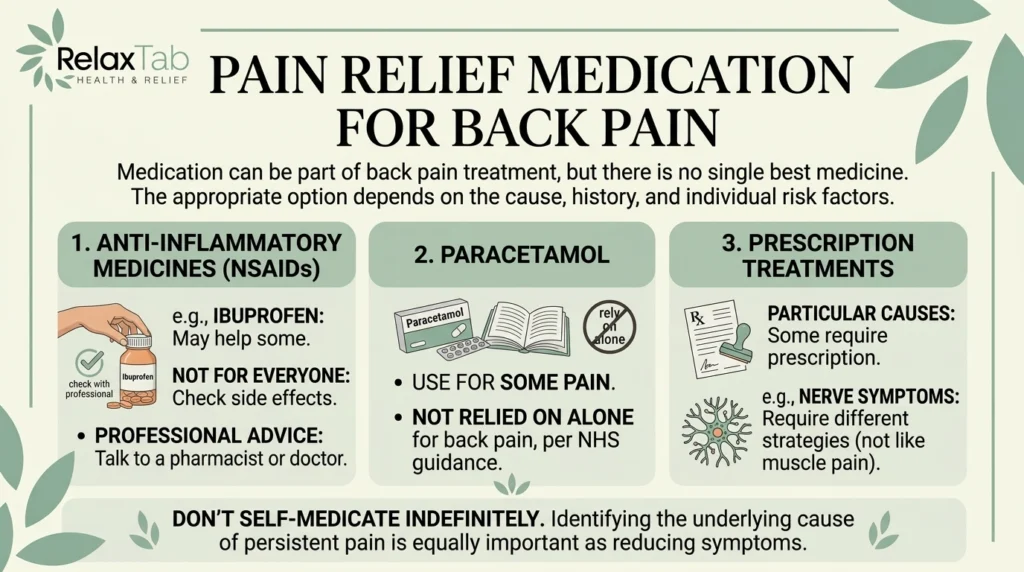
Pain Relief Medication for Back Pain
Medication can be part of back pain treatment, but there is no single best medicine for every person or every type of back pain.
The appropriate option depends on the cause of pain, medical history, other medicines and individual risk factors.
Anti-Inflammatory Medicines
NSAIDs such as ibuprofen may help some people with back pain.
However, they are not suitable for everyone and can have side effects.
NHS guidance recommends checking with a pharmacist or healthcare professional if you’re unsure which painkiller is suitable.
Paracetamol
Paracetamol may be used for some types of pain, but NHS guidance states that it should not be relied on alone for back pain.
Prescription Treatments
Some people with particular causes of back pain may require prescription treatment.
For example, nerve-related symptoms may require a different treatment strategy from straightforward muscle pain.
Don’t Self-Medicate Indefinitely
If you repeatedly need pain medication to sleep or function, consider getting the underlying cause assessed.
Medication can reduce symptoms, but identifying the reason for persistent pain is equally important.
For additional educational information, visit Relax Tab’s Pain Relief category.
You can also read our related guide on Types of Pain and Treatment Options.
When to See a Doctor for Back Pain
Knowing when to see a doctor for back pain is important.
Make a Medical Appointment If:
- Pain does not improve after a few weeks
- Pain repeatedly wakes you at night
- Pain is getting progressively worse
- Pain is interfering with daily activities
- You have unexplained weight loss
- You notice swelling or a change in the shape of your back
- Pain does not improve with rest
- You have persistent numbness or weakness
- You are concerned about the symptoms.
The NHS specifically advises medical review when back pain is worse at night or does not improve with rest.
Seek Urgent Medical Help If:
Back pain is accompanied by:
- Fever or chills
- Feeling significantly unwell
- Severe pain that starts suddenly
- Rapidly worsening symptoms
- Significant trauma such as a serious accident.
These symptoms may require urgent assessment.
Seek Emergency Care Immediately If:
You develop:
- New loss of bladder or bowel control
- Difficulty passing urine
- Numbness around the genitals, anus or buttocks
- Significant or worsening weakness/numbness in both legs
- Severe symptoms following major trauma.
These can be warning signs of serious nerve compression and require emergency assessment.
Can Stress Make Back Pain Worse?
Stress does not mean that pain is imaginary.
Pain, stress, muscle tension and poor sleep can influence one another.
When you’re stressed, you may unconsciously tense your muscles, sleep poorly or become less physically active.
A healthy routine that includes appropriate activity, relaxation, sleep and medical care when needed can support overall pain management.
Can a Mattress Cause Back Pain?
A mattress can affect comfort and how supported you feel while sleeping, but it is rarely useful to assume that the mattress is the sole cause of persistent back pain.
Before replacing your mattress, consider:
- Your sleeping position
- Pillow height
- Mattress age and condition
- Whether symptoms occur in other situations
- Your daytime posture
- Recent changes in exercise or activity.
If pain persists regardless of your sleeping setup, consider professional assessment.
FAQs
Q1: Why is my back pain worse at night?
A: Back pain can feel worse at night because you are no longer distracted by daytime activity, while your sleeping position may place prolonged pressure on muscles, joints or irritated structures. Persistent pain that worsens at night or wakes you repeatedly should be assessed rather than automatically attributed to your mattress or sleeping position.
Q2: What is the best sleeping position for lower back pain?
A: Many people find sleeping with a pillow between the knees or back sleeping with a pillow under the knees comfortable. The best position is the one that keeps your back comfortable and does not increase pain, numbness or other symptoms.
Q3: Is nighttime back pain serious?
A: Usually, nighttime back pain is not caused by a serious condition. However, pain that is progressively worsening, repeatedly wakes you, does not improve with rest, or occurs alongside fever, unexplained weight loss or neurological symptoms deserves medical assessment.
Q4: Should I sleep on my back or side if I have back pain?
A: Either may be comfortable. Side sleeping with a pillow between the knees and back sleeping with a pillow under the knees are practical positions to try. Your symptoms should guide which position feels most supportive.
Q5: Does back pain get worse with age?
A: Back pain can become more common with age because musculoskeletal and spinal conditions become more prevalent, but persistent back pain should not automatically be dismissed as a normal part of aging.
Q6: Is it better to sleep with a pillow under your knees?
A: For some people, yes. A pillow under the knees while sleeping on your back can feel more comfortable and reduce strain. If it increases discomfort, try another position.
Q7: Can sleeping position completely cure back pain?
A: No. A better sleeping position may improve comfort and reduce aggravating pressure, but it does not necessarily treat the underlying cause of persistent back pain.
Q8: Can I exercise with back pain?
A: Many people with uncomplicated back pain benefit from staying active and gradually returning to normal activities. However, severe symptoms, significant weakness, major trauma or other warning signs require appropriate medical assessment first.
Q9: Is back pain at night a sign of cancer?
A: Nighttime back pain alone does not mean you have cancer. Serious causes of back pain are uncommon. However, persistent nighttime pain combined with symptoms such as unexplained weight loss or a history of cancer warrants medical evaluation.
Q10: Can poor sleep make back pain worse?
A: Poor sleep can make pain harder to manage and may contribute to a cycle of discomfort, fatigue and reduced activity. Addressing both sleep quality and the underlying cause of pain can be useful.
Trusted Medical Guidance
For additional information about back pain, readers can consult trusted medical resources such as the NHS and NICE.
The NHS advises staying active, using appropriate self-care measures and seeking medical advice when symptoms persist, worsen or occur with warning signs.
NICE guidance emphasizes assessment, self-management and maintaining normal activities for appropriate cases of low back pain and sciatica, while recommending further investigation when serious pathology is suspected or when imaging could change management.
Conclusion
Back pain at night can have many causes, from muscle strain and prolonged sitting to sleeping position, sciatica and other spinal conditions.
Small changes can sometimes make nighttime discomfort easier to manage. Experiment with a supportive sleeping position, avoid staying still for long periods during the day, use heat or cold appropriately, and maintain gentle activity when suitable.
However, don’t ignore persistent or worsening symptoms.
If your back pain repeatedly wakes you, does not improve with rest, affects your daily activities, or occurs alongside fever, unexplained weight loss, numbness, weakness or other warning signs, seek medical advice.
Most importantly, the best approach to back pain is not simply to mask the symptom. Understanding the cause and choosing an appropriate treatment strategy can help protect your mobility, sleep and long-term wellbeing.
Visit Relax Tab today and explore our pain relief and wellness range.